

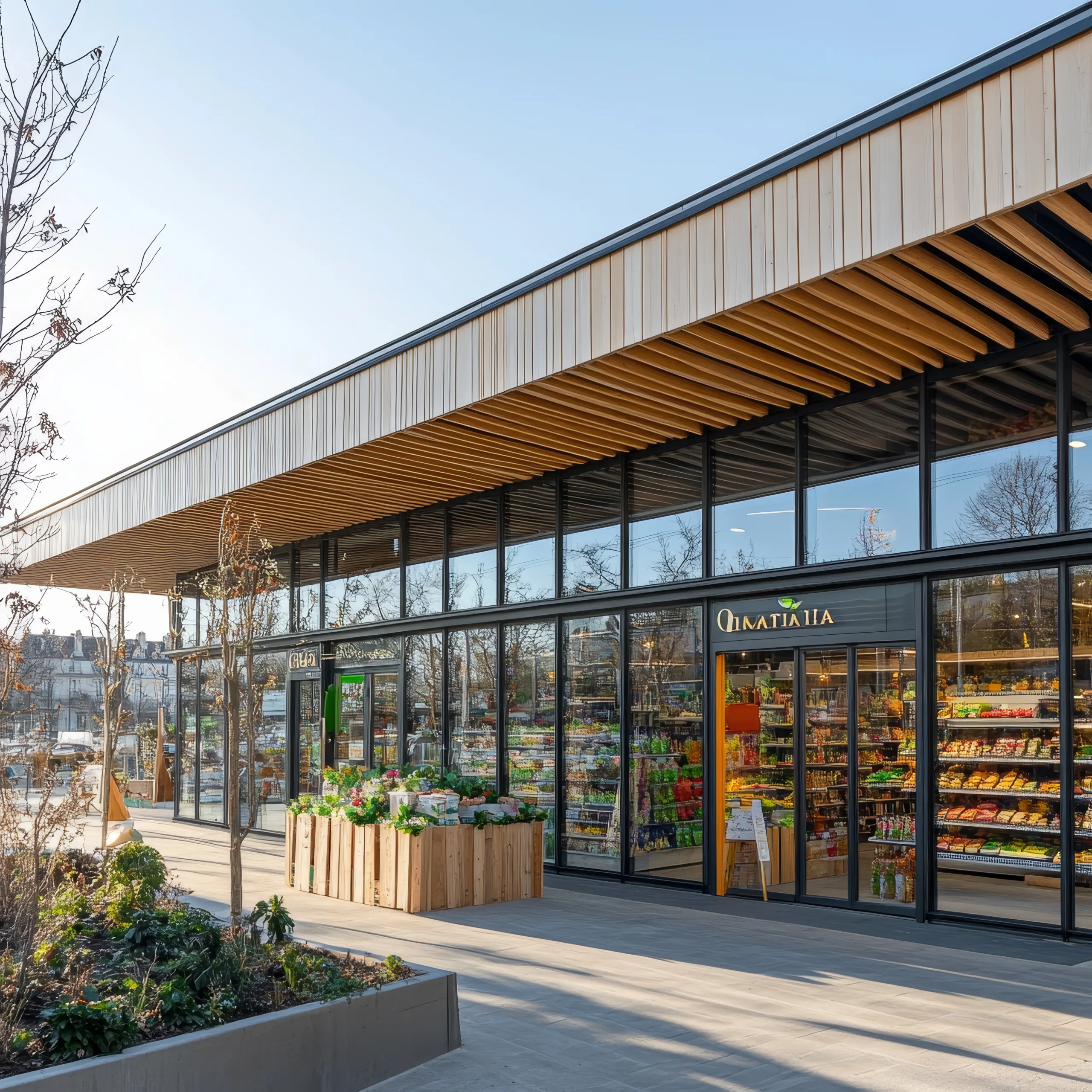
- Grocers like Erewhon and Safeway are redesigning stores to promote community interaction, with features like narrow aisles, bars, and outdoor seating.
- Architects are tailoring stores to reflect local architectural styles, helping foster a stronger connection between consumers and their neighborhoods.
- While some grocers still prioritize speed and efficiency, many are leaning into design as a competitive edge in the post-pandemic retail landscape.
A More Intentional Grocery Experience
Forget the image of a sprawling, impersonal grocery store. Today’s grocers are turning to architecture and design to elevate the shopping experience, fostering longer visits and deeper community ties. From luxury chains like Erewhon to more mainstream names like Safeway and Albertsons, design is being deployed as a retail strategy, per CoStar.
At Erewhon, a luxury grocery chain in Southern California, aisles are purposefully narrow—just 4.5 to 5 feet wide compared to the industry standard of 6.5 feet. The goal? Spark spontaneous interactions between customers and staff. “They want that interaction,” said Terry Todd, architect at RDC. “They have so many unique things that they sell, and they want customers asking questions.”
Get Smarter about what matters in CRE
Stay ahead of trends in commercial real estate with CRE Daily – the free newsletter delivering everything you need to start your day in just 5-minutes
Not Just Groceries—It’s A Destination
Design-forward grocery stores are increasingly offering more than just food. Many now include indoor-outdoor dining areas, sushi counters, and even full-service bars.
A Town & Country Market in Mill Creek, Washington, designed by Cushing Terrell, features sliding doors connecting indoor and outdoor seating. In Atlanta, a Publix location includes a bar serving cocktails, transforming the store into a social space. “They’re looking to create a sense of place,” said Daniel Taub of Marcus & Millichap
Neighborhood-Centric Design
Grocers are also customizing store exteriors to reflect local architecture. In Roseville, California, a Safeway designed by Nadel Architects uses dark timber, rustic shingles, and stone columns to mirror the city’s American Craftsman style. In McCall, Idaho, an Albertsons was built to resemble a mountain cabin.
“Your entire space, not just the interior but also the exterior, needs to engage the consumer,” said Sheri Blattel of Cushing Terrell.
Post-Pandemic, Design Is A Differentiator
Although grocery foot traffic plummeted during the pandemic, it rebounded strongly—rising 10.9% in 2024 compared to 2019, per JLL. That resurgence has shifted retailer priorities. “The idea that people were going to do all their shopping online really fell flat,” said architect Greg Lyon.
Now, consumers—especially Millennials—are placing greater value on experience and ambiance. That’s influencing design choices, including high-end finishes in bathrooms, outdoor patios, and branded smoothie bars.
A Growing Trend
Luxury chains like Erewhon, PCC Community Markets, and Bristol Farms have long focused on customer experience, but more grocers are following suit. Erewhon, for example, continues to expand with stores in upscale Los Angeles neighborhoods and quirky products like $20 strawberries and $100 sea moss jars—items designed to inspire curiosity and conversation.
As Blattel puts it, grocery stores are returning to their roots as community gathering spots. “Grocery and food markets have been human connectors for centuries. The space should reflect that.”
What’s Next
Expect more grocers to rethink their store designs—not just to optimize traffic flow but to become local hubs. With landlords also benefiting from increased foot traffic, the trend of turning supermarkets into “third places” shows no signs of slowing.